- February Reset: Bedrooms
Creating Rest, Not Just Order

February is quiet in a way that January isn’t. The rush of “new year, new everything” has faded, but winter is still very much here. We’re tired. We’re inside more. And if there’s one space that feels the weight of that, it’s the bedroom.
This month’s reset focuses on bedrooms—not to make them picture-perfect, but to make them restful. A bedroom doesn’t need elaborate systems or matching bins. It needs fewer decisions, fewer visual distractions, and less emotional baggage hiding in drawers and closets.
Why Bedrooms in February
Your bedroom is where your body is supposed to recover. When it’s crowded with clothes you don’t wear, piles you avoid, or items tied to past seasons of life, rest becomes harder than it needs to be.
February is the right time to:
- Reclaim calm before spring energy hits
- Let go of winter clutter while it’s still visible
- Reset clothing and sleep spaces before warm weather adds another layer
This isn’t about a full wardrobe overhaul. It’s about releasing what no longer supports how you live right now.
Where to Focus (Keep It Small)

You don’t need to do everything at once. Choose one area at a time:
- Closet (just your bedroom—not the whole house)
- Dresser drawers
- Nightstands
- Under-bed storage
If you only do one of these, that still counts.
What to Let Go Of
Clothing
- Pieces that don’t fit your current body or lifestyle
- “Maybe someday” outfits you’ve skipped over for years
- Duplicates you always ignore in favor of the same few favorites
A good rule of thumb:
If you wouldn’t buy it again today, it doesn’t need to stay.
Bedroom Extras
- Excess bedding you never reach for
- Broken or mismatched hangers
- Items stored “temporarily” that became permanent
Bedrooms in older homes tend to carry layers of life. That’s normal. This reset is about deciding which layers still belong.
What to Sell vs Donate
Sell If:
- It’s in good condition and still has value
- You’d be happy to get a little money back rather than store it
- It’s something someone else is actively searching for
Examples:
- Quality jackets, coats, or boots
- Maternity or baby clothes in good condition
- Name-brand denim, handbags, or outerwear
Selling doesn’t need to be a full-time job. One or two items is enough.
Donate If:
- It’s useful but not worth the effort to sell
- You’re keeping it out of guilt
- Someone else could benefit from it now
Examples:
- Everyday clothing
- Extra blankets or sheets
- Shoes that are wearable but not valuable
Letting items move on—through selling or donating—is part of finishing the reset. Bags sitting in the corner don’t count.
This month, I chose to sell all of the jewelry I no longer wear that is either gold or sterling silver to alloy market. The process was super easy and they came back with a very reasonable quote. I took that money and put it in my kid’s taxable brokerage – the jewelry will grow with my family much better in there then in a box collecting dust.
For clothing and accessories, the selling platforms I frequently use are:
- The Real Real – for high end, luxury goods
- Thread Up
- Poshmark
- Mercari
- Facebook Marketplace
Nightstands: The Overlooked Stress Zone
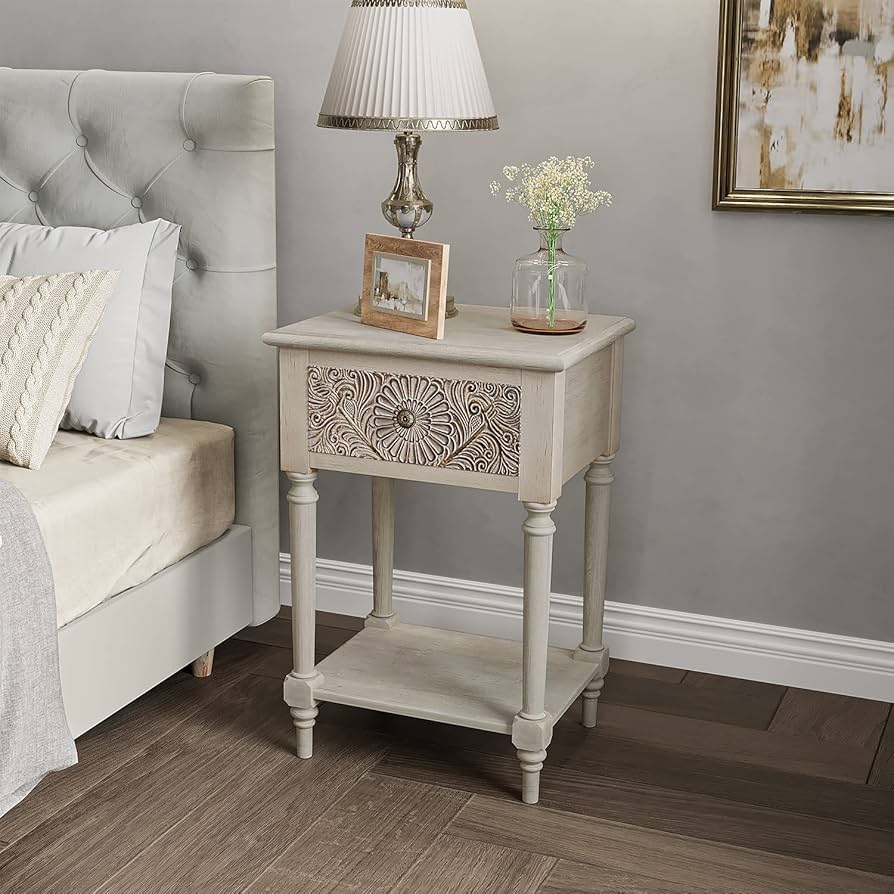
Clear everything off your nightstand. Then put back only what supports rest:
- A lamp
- A book you’re actually reading
- A glass of water
- One or two personal items that feel grounding
If it doesn’t belong to nighttime or rest, it doesn’t belong here.
Under-Bed Storage (Be Honest)

If you forgot what’s under your bed, that’s your sign.
Ask yourself:
- Would I go looking for this?
- Would I miss it if it were gone?
- Is this being stored—or avoided?
Keep only what has a clear purpose.
What This Reset Changes
A calmer bedroom doesn’t just look better—it feels different.
- Mornings are quieter
- Evenings feel less rushed
- Sleep improves in subtle ways
This isn’t about minimalism as an aesthetic. It’s about making room for rest in the homes we actually live in.
Coming Next Month
In March, we’ll move into bathrooms and linen storage—another space that quietly fills with things we meant to use “eventually.”
For now, start here. One drawer. One bag. One decision at a time.
Progress counts, even when it’s slow.
- The Ultimate Guide to Multi-Kid Strollers
Since my oldest is now almost 6, I have effective ditched the bulky double stroller from my two under two days in favor of a super-lightweight and easy to fold umbrella stroller for my 4-year old. Now with a little one enroute, I’m back to the drawing board with my next stroller. In my research I put together some of the pros and cons of the most common double stroller options out there to hopefully help other mama’s to be!
This guide compares some of the most popular multi-kid strollers, including UPPAbaby, Mockingbird, Baby Jogger, Joovy, and Veer, focusing on what actually matters: weight, price, kid capacity, car seat compatibility, and real-world usability.
No hype. No pressure. Just the trade-offs.
UPPABaby Vista V2
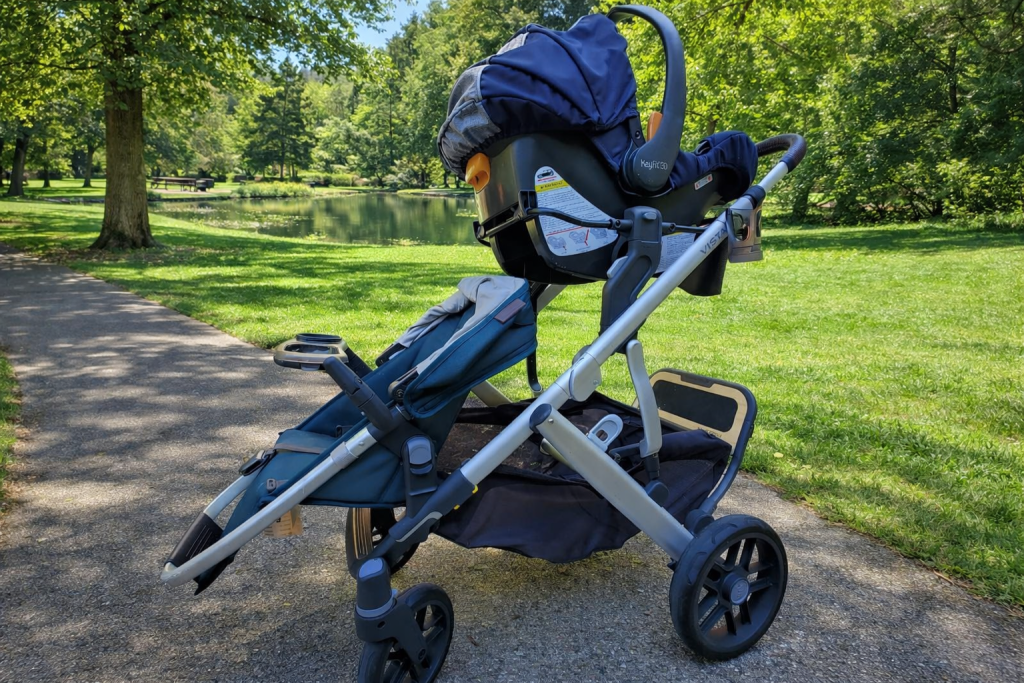
What it’s known for
A luxury stroller with a very smooth ride and a polished look.Pros
- Excellent suspension
- Converts from single to double
- High-quality materials
- Multiple infant car seat adapters available
Cons
- Heavy once fully configured
- Expensive before accessories
- Takes up a lot of trunk space
- Second seat weight limits can feel restrictive long-term
Best for: Daily walks, urban/suburban life, and families prioritizing ride quality over portability.
Pro Tip: The used market is very saturated with these, check your local marketplace listing and score one for less than half the price!
Mockingbird Single-to-Double
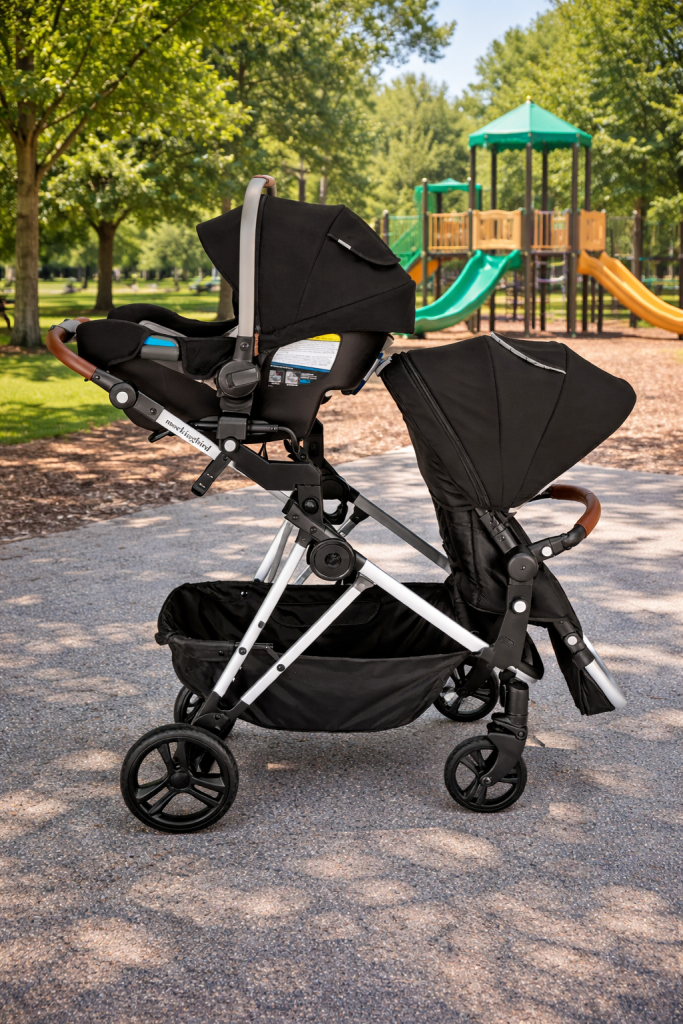
What it’s known for
A more affordable alternative to UPPAbaby with a similar aesthetic.Pros
- Lower cost than luxury brands
- Converts from single to double
- Clean, minimalist look
- Compatible with many infant car seats
Cons
- Still fairly heavy
- Not ideal on uneven terrain
- Accessories add cost
- Bulk increases quickly when converted to double
Best for: Families who want flexibility and style without luxury pricing.
Baby Jogger City Select 2
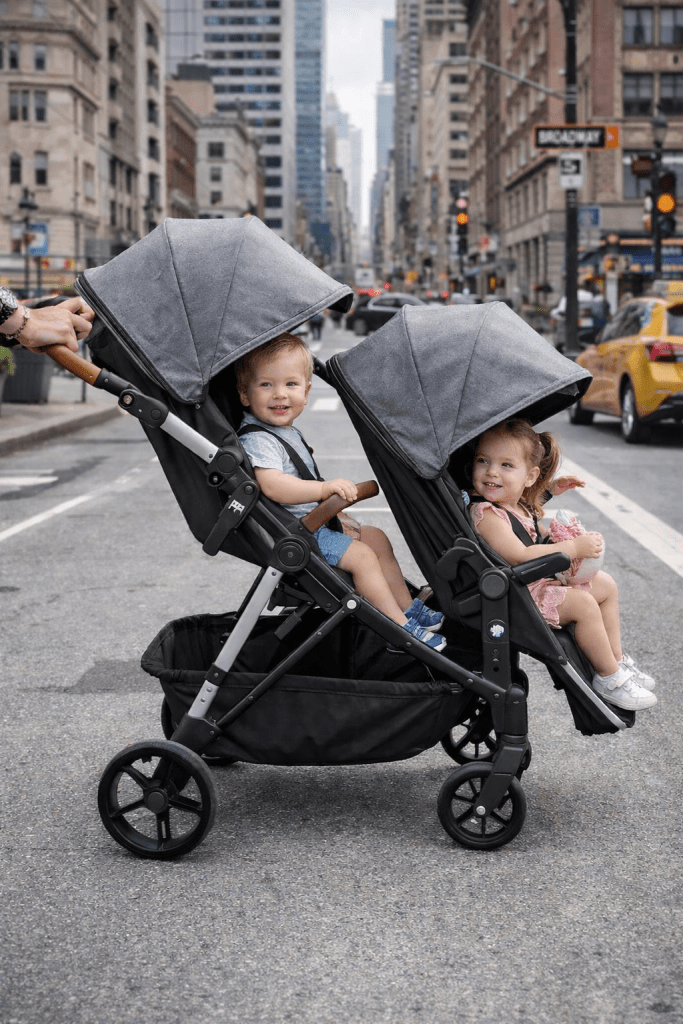
What it’s known for
Practical configurations without luxury markup.Pros
- Lighter than many comparable doubles
- High total child weight capacity
- Multiple seating configurations
- More manageable fold
Cons
- Less visually “premium”
- Accessories sold separately
- Steering is solid, not plush
Best for: Parents who value function, flexibility, and longevity.
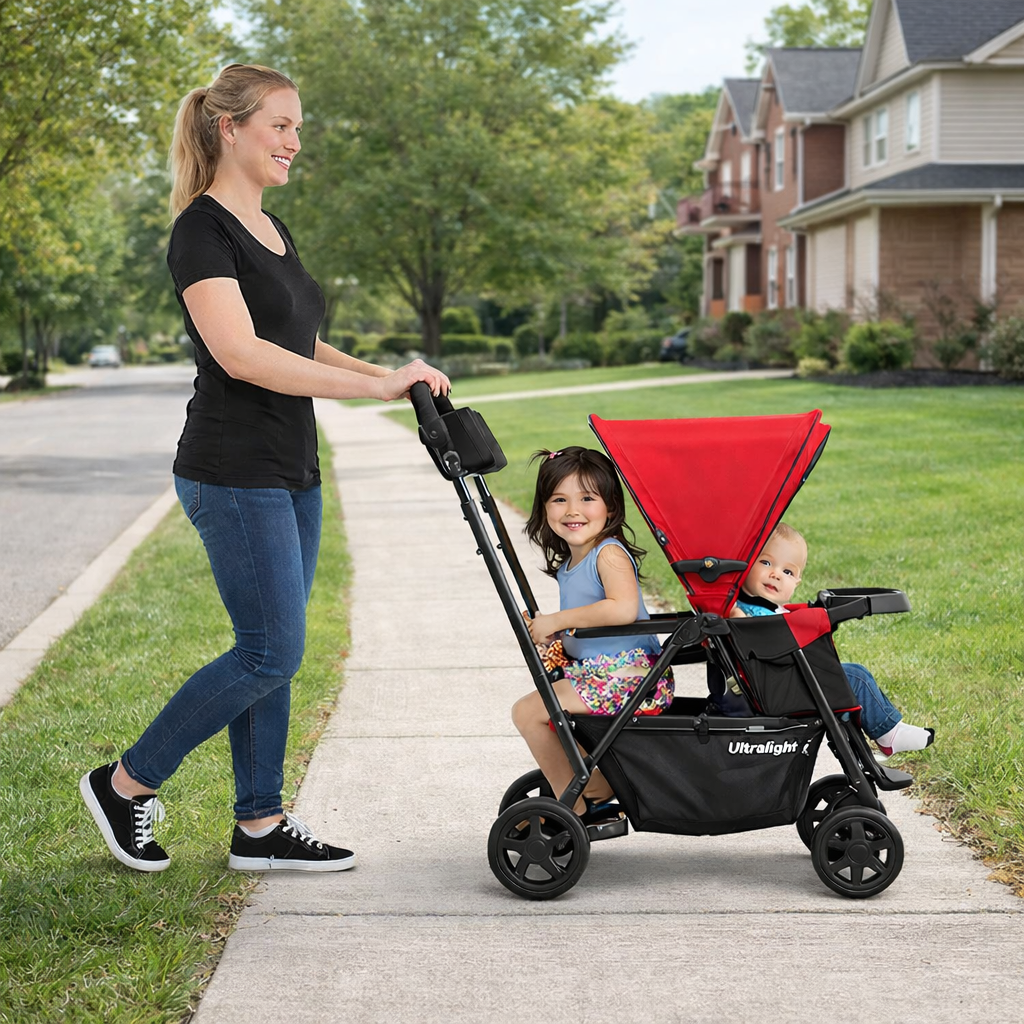
Joovy Caboose Ultralight (Sit & Stand)
What it’s known for
A realistic option for kids with age gaps.Pros
- Lighter than traditional double strollers
- Affordable
- Compact compared to full doubles
- Great for preschoolers who want independence
Cons
- Limited comfort for long outings
- Smaller storage basket
- Not ideal for two young toddlers full-time
Best for: Families with a baby + older toddler combo.
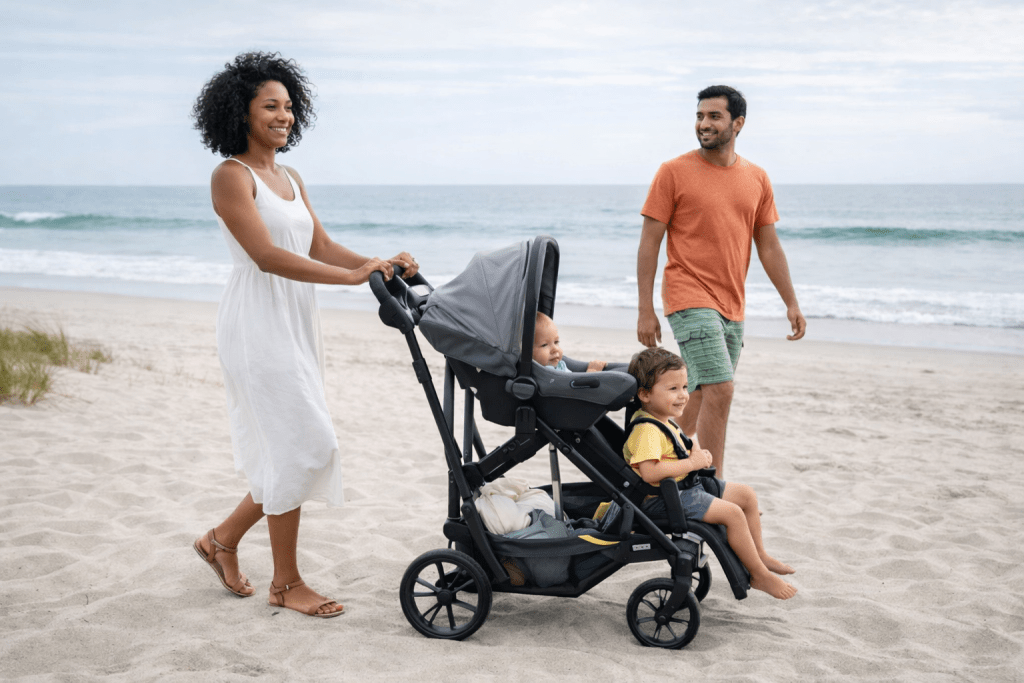
Veer Switch&Roll Stroller
What it’s known for
A rugged, modular stroller system built for families who want stroller structure with outdoor durability—without committing to a wagon.The Switch&Roll uses the Switchback seat, which clicks into different frames (stroller, jogger, bike, etc.), making it more of a system than a single-use stroller.
Pros
- All-terrain wheels handle grass, gravel, and uneven paths well
- Switchback seat is removable and reusable across Veer systems
- Higher seat weight capacity than many traditional strollers
- Compatible with infant car seats (with adapters)
- Narrower and more maneuverable than a wagon
Cons
- Expensive once you build out the system
- Heavier than standard single strollers
- Multi-kid setup requires purchasing additional seats/frames
- Less “plug-and-play” than traditional doubles
Best for:
Active families who want a stroller that can adapt to outdoor life, multiple stages, and future configurations without going full wagon.Comparison Chart
Model Approx Price Stroller Weight Max Child Weight Car Seat Compatible Converts / Grows Best For UPPAbaby Vista V2 $$$$ ~26.6 lbs ~50 lbs per seat* Yes (adapters) Single → Double Smooth ride, daily walks Mockingbird Single-to-Double $$$ ~26 lbs ~45 lbs per seat Yes (adapters) Single → Double Budget flexibility Baby Jogger City Select 2 $$$ ~24 lbs ~45 lbs per seat Yes (adapters) Highly modular Practical longevity Joovy Caboose Ultralight $$ ~23 lbs 55 lbs bench / 45 lbs seat Limited Sit-and-stand Larger age gaps Veer Switch&Roll $$$$ ~32 lbs ~50 lbs per seat Yes (adapters) Modular system Outdoor + adaptable *limited to 40lbs in the lower position
The Little Home Energy Take
If your life involves tight parking, stairs, small storage, or lifting solo, weight matters more than brand.
If your life involves parks, trails, sports fields, or older kids who still need a ride, Veer can replace multiple strollers over time.
No stroller here is “the best.”
The best one is the one that:- Fits your space
- Matches your kids’ ages
- Doesn’t make you dread leaving the house
That’s the real energy saver.
Personally, my family will be choosing the Veer Switch & Roll for the following reasons:
- Car Seat Flexibility (multiple adaptor options for many popular seats)
- Rumble Seat Max. Weight – my 4 year old has special needs and occasionally needs to be in a stroller, this will give me the flexibility to support him and he will not grow out of it right away.
- Terrain Handling – I’m always in rough terrain either going to sports games or chasing my 6 and 4 year olds around and I need the stability with a heavier child on the front.
*my goal is to offset the cost by looking for used or open box options.
- Minimalist Baby Needs
Minimalist Baby Needs
(From a Mom of Two, Soon to be Three)
Affiliate Disclosure: This post contains affiliate links, meaning I may earn a small commission at no extra cost to you if you make a purchase through them.
When I was pregnant with my first, I thought I needed everything. A full nursery. Drawers of tiny outfits in every size. Gadgets I didn’t even understand yet.
Now, here I am—mom of two, baby number three loading—and I can tell you with full confidence: you need far less than you think.
This isn’t about doing less for your baby. It’s about doing what actually matters—and giving yourself room to breathe.
Let Me Say This First (Because It Needs Saying)
You do not need:
- A finished nursery before the baby arrives
- Baby clothes in multiple sizes
- Every baby product Instagram is trying to sell you
Babies need closeness, safety, milk, sleep, and clean diapers. That’s it. The rest? You can prep later—or order in two days with free shipping or 3 hours on Instacart while holding a newborn in your arms.
“But Don’t I Need a Nursery?”
Nope. And honestly? You probably won’t use it at first anyway.
Most babies sleep in their parents’ room for at least the first 6 months (and often longer). Mine did. Night feeds are easier. You’re not pacing down the hall at 2 a.m. And it just… makes sense.
Instead of a nursery, think:
- A safe sleep space in your room (bassinet or mini crib)
- A diaper caddy
- A small basket for clothes and swaddles
That’s it. A baby doesn’t know if their onesie came from a Pinterest-perfect nursery or a laundry basket next to your bed. I promise.
Minimalist Baby Clothing
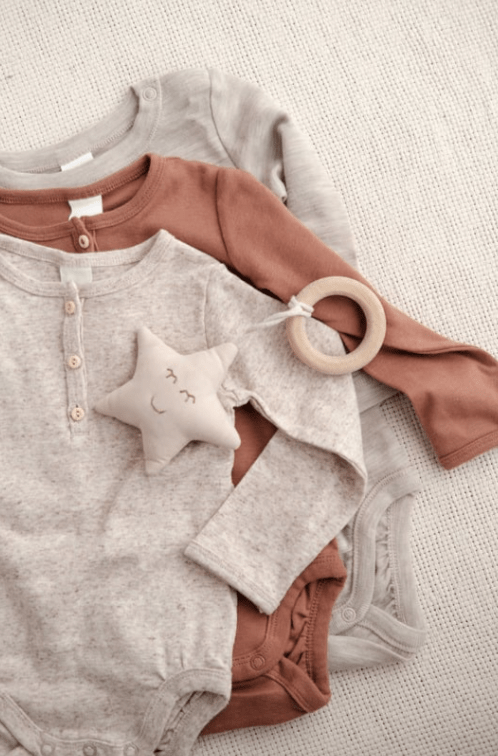
Here’s the truth: You don’t know how fast your baby will grow. Or what size they’ll actually wear – So skip the multi-size stockpile.
What you actually need:
- 6–8 newborn or 0–3 month sleepers – get the double zip ones for easier access for diaper changes. Link
- 4 muslin swaddles – also double as burp cloths. Link
That’s it.
If your baby sizes up in two weeks? You order more. Later. Easily. Having less makes laundry easier, clutter smaller, and decisions simpler—especially postpartum.
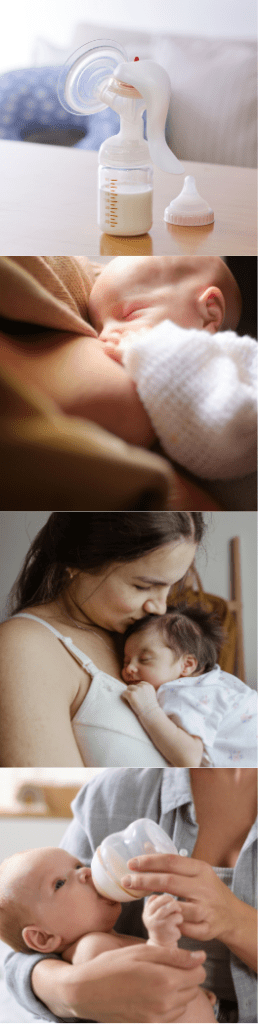
Breastfeeding & Pumping
Here’s a minimalist setup that actually works.
Breastfeeding essentials:
- Nipple cream Link
- Reusable or disposable nursing pads Link
- Collection cup – to collect the let down on one side while feeding. Link
- A few comfy nursing bras or tanks Link
Pumping basics (if you plan to pump):
- A breast pump (insurance often covers this)
- 2–3 bottles – I love these because they are easy to clean and mimic the shape of a breast to support proper latching. Link
- A drying rack, mat, or clean towel
- Freezer bags Link
You don’t need:
- A freezer stash on day one
- Ten different bottles
- Sterilizer, toss everything into a bowl of warm soapy water until ready to clean.
- A pumping cart worthy of a photoshoot
- Special milk containers, use freezer bags or an empty jar.
- Burp cloths, just use the muslin swaddles you already have
Start simple. Adjust as your body and baby tell you what they need.
Diapers, Bath, Sleep & The “Boring” Essentials
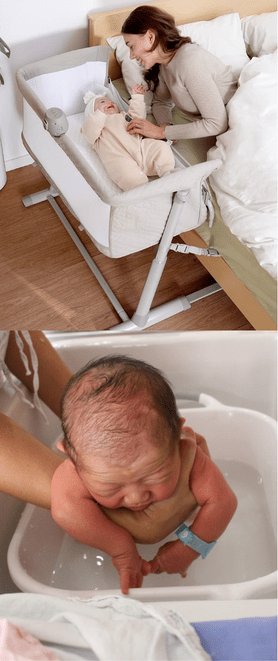
Diapering/Bath:
- One box of newborn diapers
- Wipes
- Diaper cream
- A changing pad (floor, bed, dresser—your call)
- Infant Tub or safe washing area
- Baby Soap and Lotion. Link
Sleep:
- Bassinet or crib in your room – I love this one because it attaches to your bedside and you can just scoot the baby back in it once you are done feeding. Link
- Optional: sleep sacks but muslin swaddles also work well. Link
That’s it. No sound machine with 37 modes. No baby lounger in every room. You can add later if you want.
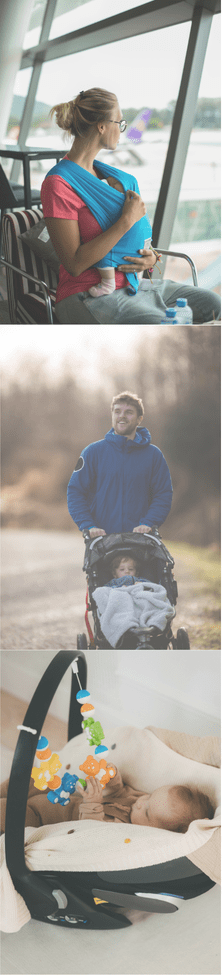
Getting Around: Car Seat, Stroller, & Babywearing
This is where people tend to overbuy fast. You don’t need a whole system for every scenario—you just need one solid option per category that works for your real life.
The Car Seat (Start Simple)
Most families choose either:
- An infant car seat (easy transfers, stroller-compatible), or
- A convertible car seat (grows with baby, fewer items overall)
Both are perfectly fine. What matters most is that it, fits your car, is installed correctly, meets current safety standards
The Stroller (One Is Enough)
- Choose one that fits in your trunk, is easy to fold one-handed, works from baby to toddler (or adapts easily), and will cover everyday life just fine
- Note: many strollers come with a basinet option, save your money because 9 times out of 10 you will be using their car seat.
Babywearing (The Real MVP)
If I had to choose one thing that makes life easier in the early months, it’s babywearing.
- One wrap or soft carrier keeps baby close, frees up your hands, helps calm fussy babies. This one is my personal favorite because its simple and easy to use. Link
Postpartum Essentials (For You, Not the Baby)
We spend so much time preparing for the baby that we forget something important: you’re recovering from birth. Whether that’s vaginal, C-section, or somewhere in between, postpartum care doesn’t need to be excessive—but it does need to be intentional.
You don’t need a bathroom full of products. You need a few things that actually make those early days easier.
For recovery & comfort:
- High-waisted, comfortable underwear (disposable or reusable—your preference)
- Large pads or postpartum briefs – I love these because they don’t feel like wearing a diaper and are c-section friendly. Link
- Peri bottle Link
- Ice packs or cooling pads (especially the first few days)
- Loose, breathable clothing
- A cozy robe or oversized button-down
For rest & nourishment:
- A large water bottle (hydration is everything postpartum)
- Easy snacks you can eat one-handed
- Prenatal Vitamins
- A basket for feeding and postpartum essentials you can move from room to room. Link
- Simple meals you can reheat without thinking
You don’t need to set up a “postpartum station” in every room or buy specialized versions of everything. One basket with the basics near where you’ll spend most of your time is more than enough.
A Gentle Reminder
Postpartum is not the time to push, prove, or bounce back. It’s a season of healing, bonding, and slowing down—whether it lasts weeks or months. Minimalism here isn’t about doing less for yourself. It’s about doing what actually supports you.
You can always add later. Order later. Adjust later.
Right now, rest is productive.
Below is a printable list of everything recommended above, I hope this helps!
Hello,
I’m Ember

Human mom of 2 (with another on the way) and dog mom of 2 living in a 900 sq ft. home. If you want all things modest living, lifestyle, motherhood, and organization you’ve come to the right place. Lets connect and build this community together!
Let’s connect


